Service Spotlight: Maternal and child health nurse Ellise
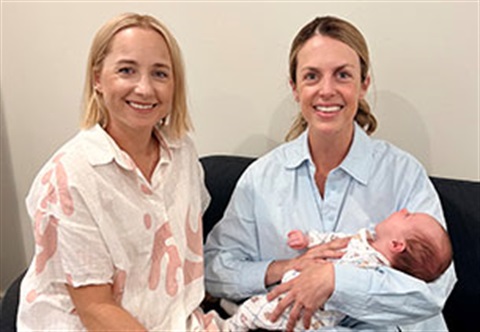
The first 1,000 days: Nurses here for families right from the start
Nothing can truly prepare you for becoming a parent, but the right support early on can make a huge difference - for both the child and their parents.
Maternal and child health nurses are there from the start, helping families navigate the early days with advice, reassurance and care.
“Raising kids is one of the biggest challenges in life, and a large part of our community are young families,” Surf Coast Shire Council Maternal and Child Health Nurse, Ellise says.
“It’s a voluntary service, but families keep coming back. That tells us it’s something people really value.”
Supporting parents when they need it most
The Surf Coast Shire team is made up of eight nurses – many have worked together for more than a decade. That stability means families often see the same nurse throughout their child’s early years.
“That continuity of care is really important. Often families will see the same one or two nurses along their journey,” Ellise says.
“We have families coming in in all shapes and sizes. It’s not just the mums - we see dads, grandparents and carers bringing little ones in too.”
“We turn up every day hoping to make a difference.”
A quick glance around the consulting room suggests they do just that. Thank-you cards and gifted propagated plants sit on shelves – small tokens of appreciation from grateful parents. And these words of genuine gratitude from a mum with a newborn nuzzled into her chest leaving her appointment as we entered: “Ellise is a great one to profile, she’s so good.”
A unique service that’s not the same in every state
Victoria’s maternal and child health service is unique in Australia – under our system it’s automatically offered to all families and run by local councils.
“Families don’t have to go looking for the service - it comes to them,” Ellise says.
Hospitals notify Council when a baby is born. From there, maternal and child health nurses reach out to families – usually meeting them in the baby’s second week of life.
The first appointment is typically at home, before families begin visiting their local maternal and child health centre.
“We check how babies are growing and developing and whether they’re meeting their milestones. But a big part of our role is checking in on how the parents are doing too – physically and emotionally. Because we know that if parents are doing OK, then the children generally are too.”
Caring for whole family
The service takes a family-centred approach, looking beyond the baby to the wellbeing of the whole family.
As a parent herself, Ellise understands the rollercoaster ride of raising children.
“I can relate to the highs and lows of having children. We want to support parents through those lows so that they can then find the enjoyment in their parenting journey.”
The first 1,000 days matter
Those early years matter enormously.
“The first 1,000 days of a child’s life are the most important in terms of future health outcomes,” Ellise says.
The service also plays a key role in supporting vulnerable families, helping connect them with the help they need – whether that’s community services, practical support or essential items like cots and car seats.
“We’re here to ask families what they need support with and help link them to the right services. We’re trusted with very vulnerable clients, it's where you make the most difference.”
The team is constantly adapting to meet the needs of local families.
Regular parent surveys have helped shape services, including a very well used weekly drop-in session every Friday from 11am to 1pm, where parents can stop by without an appointment to ask questions or seek reassurance.
A career of dedication and years of study
It’s often a career-long journey for maternal and child health nurses.
“We have to do quite a bit of study to get here,” Ellise says. “It starts with a nursing degree, then you go back to university to become a midwife, and then you complete another postgraduate qualification to become a maternal and child health nurse. All up it’s about six years of study.”
“And a lot of us have additional qualifications on top of that – I’ve also been a lactation consultant for the past seven years.”
15,000 babies - and counting
Over the course of her career, Ellise has supported more than 15,000 babies and their families.
That follows her earlier work as a midwife, where she helped bring more than 1,000 babies into the world.
For Ellise, one of the greatest privileges of the job is seeing children grow over time.
“You meet them as newborns see them again at 10 key visits up until they’re three and a half. Seeing what they’re capable of by then is amazing, and you feel like you’ve played a small part in that.”
Quick stats: Supporting Surf Coast Shire’s newest residents
During the 2024-25 financial year:
- 364 birth notifications for the Surf Coast Shire, including:
- Anglesea/Aireys Inlet area: 31 (up by 7)
- Lorne area: 4 (down by 1)
- Moriac area: 27 (up by 12)
- Torquay area: 253 (down by 27)
- Winchelsea area: 49 (down by 4)
- 1,436 children attended appointments with Council’s Maternal and Child Health staff
- 3,253 Key Age and Stage consultations completed
- 490 additional support consultations
- 90 hours of telehealth
- 917 hours of Enhanced Maternal and Child Health program delivery (outreach and home visits to families experiencing vulnerability)
- 246 hours of parent groups
- 110 parents attended first-time parents’ groups and 36 attended sessions for non-birthing parents
- 156 hours of community strengthening activities (playgroup support, group outreach and parent and child Mother Goose Program)